

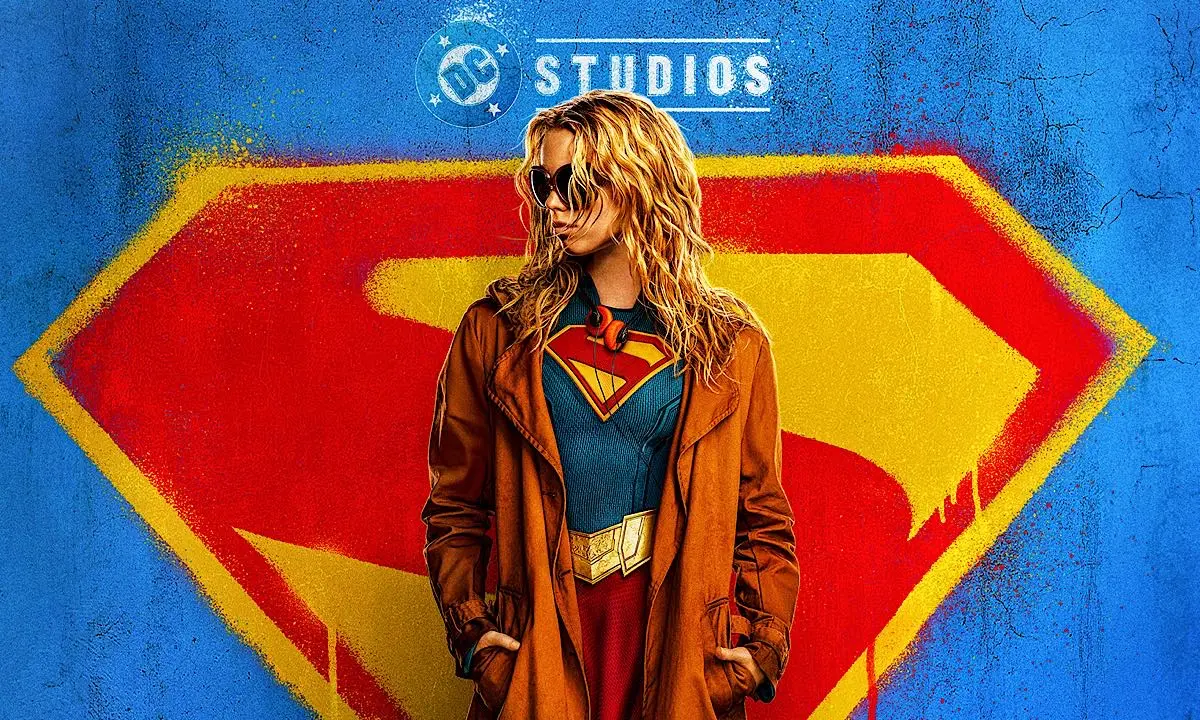
Following her comic debut in 1959, Supergirl emerged by Superman‘s side with a cheeky joy and barrels of strength. As her cousin’s equal, Supergirl could do everything he could – and still have time to smash that long-cemented glass ceiling. And, after decades of fighting intergalactic threats, working full-time and dealing with her own existential angst, it was time for Supergirl to fly onto the silver screen – and turn it brilliant blue and red.
Fans have revelled in her highs and lows, from sacrificing herself for the fate of the multiverse to dealing with her rage over the loss of Krypton. Supergirl gave us yet another story to believe in, another alien with remarkably relatable human tendencies. But, this time, she wasn’t just another muscled, stoic man. This time, she was doing it for the girls.
Supergirl has been reincarnated for our viewing pleasure many a time; she’s been a high-schooler, a protector, a friend and a symbol of female empowerment. From her iconic solo movie in 1984 to her 21st century romps in National City, Kara’s consistent presence in the superhero world reflects something important: that people want her to keep on coming back.
This is Supergirl’s on-screen legacy, from the cinematic to the episodic.
Television

Supergirl’s TV journey began in the early 2000s, making a spate of appearances in Smallville. The show, which ran from 2002 to 2011, grounded the superhero genre in the restlessness of adolescence. Superman (played by Tom Welling) is now living in his fictional hometown of Smallville in Kansas; he spends his days at high school, not yet the Man of Steel – but with one very special guardian. After spending 18 years in suspended animation, Supergirl (living under the alias Linda Danvers) is sent to look out for her younger cousin.
During Smallville, Supergirl, played by Instant Star and Haven actress Laura Vandervoort, flipped a long-held power dynamic on its head. After historically being supported by her elder cousin, in Smallville, Supergirl was the chief protector.
She was given her own set of challenges, worthy of those faced by Superman – and she rose to the occasion each time. Peril arose when supreme villain Brainiac places a large target on her back, trapping her in the Phantom Zone and posing as her on Earth. But, Kara’s determination never flickered. In 2010, she returned to Metropolis to become ‘The Maiden of Might,’ forging her an identity beyond Superman’s girl-cousin. This carving of a separate path only continued when she is transported away from Earth via the Legion Ring, in order to achieve her destiny. This later concludes with her joining the Legion of Super Heroes – and becoming a member of the Justice League.
Smallville gave Kara an identity beyond her cousin; she was spotlighted as a fierce defender, champion of the people and an emboldened fighter. And, in 2016, this journey of independence only continued to flourish.
In 2016, actress Melissa Benoist was given the keys to the Supergirl legacy – and allowed the heroine to triumph in her own solo series. A series that was grounded in the Arrowverse, Supergirl ran from 2016 to 2021 – and focused on Supergirl’s immense power. During its six season run, Kara was the main protector of National City, her home throughout the show. Show developer Greg Berlanti explained that, to give the character a fresher perspective, she was based around the innocence tenacity of Ginger Rogers. A far cry from the adolescence of Smallville!
What made the Supergirl series standout was its commitment to showing the woman behind the mask – and how strength isn’t all super-human strength. Common Sense Media described Kara as “industrious, self-motivated, and empathetic,” proving she could be more than just a shadowy emblem of feminism. Throughout the course of the show, Supergirl fought criminals once imprisoned by her mother, befriended Lena Luthor, adopted sister of Lex, and battled the dastardly imp Nyxlygsptlnz.
The show made a conscious choice to ditch the doom-and-gloom approach, opting for a Supergirl story that prioritised heart. Melissa Benoist was described as the ‘best Supergirl we’ve seen in live action’ by Collider – and yet again, Supergirl’s story was proven to be one of determination and autonomy.
Film
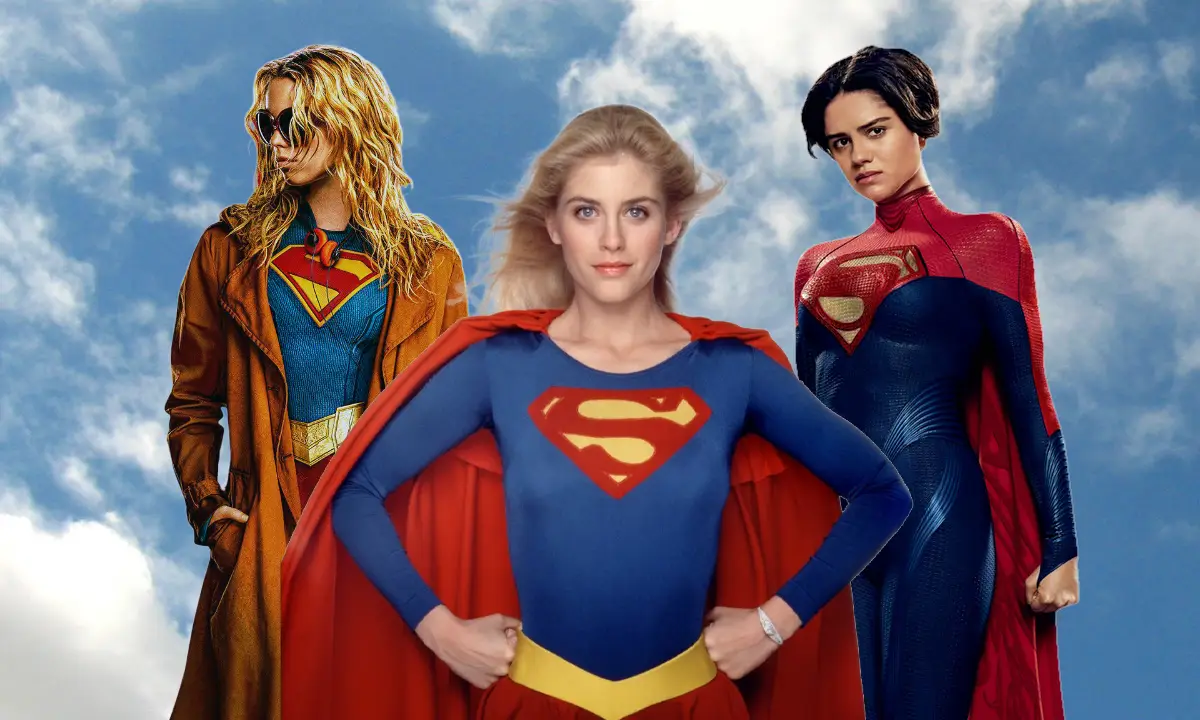
Not long after Supergirl was relaunched in her own comic book story, her filmic journey began. In 1984, she debuted in a live-action solo movie, simply titled Supergirl, after the 1978 release of the much-lauded Superman movie. This was making a statement – it proved that the heroine’s story could survive alone, without the crutches of a male legacy.
Directed by Jeannot Szwarc (most known for Jaws 2), Supergirl was played by newcomer Helen Slater, marking it as her film debut. Kara, currently living in Argo City, goes on a desperate search to find the object that powers her hometown – the Omegahedron. In her search to find it, she lands on Earth, adopting the name Linda Lee, and attends an all-girls school. However, the orb has landed in the wicked hands of Selena, a witch played by Faye Dunaway. Along the way, Kara makes friends with Lucy Lane, and even finds love in school groundskeeper Ethan.
Whilst Supergirl’s first cinematic presence was revolutionary for the character, audience and critic reception was less than warm. Dismissed as “a fun film, in a vacuous sort of way” by Imagine magazine, Supergirl was campy, kitschy and fleeting. It failed to land the sort of reverential praise garnered by her cousin’s movie, whose charm and innovation was incredibly fresh for the eyes. The filmmakers failed to create an atmosphere in which Supergirl could be taken seriously, as she was seen as a “wide-eyed, cheery heroine,” who “simply isn’t interesting.” The film also landed two Razzie nominations, both for co-stars O’Toole and Dunaway.
However, it was clear that, whilst this film didn’t service Kara dutifully, it did give audiences a fun time. And, in a world with intense and macho supermen, this gave viewers a sense of revitalisation. Different Worlds magazine detailed how it was “just the boost the American theatre scene needs,” after such dismal and dull additions to cinema. And, Slater’s performance of the plucky Supergirl was high and mighty. Perhaps it wasn’t as heartwarming as Superman’s solo movie. Perhaps it wasn’t as enduring. But, 1984 was the year where Supergirl’s filmic legacy was cemented – and it was clear this flight was only just taking off.
Supergirl’s legacy took a minor backseat, as the DC universe expanded and transitioned. Other heroes and heroines took centre-stage, being remoulded and recasted before our eyes. But, in the early 2020s, Supergirl re-entered the movie scene in a delightfully modern style.
Andy Muschietti’s The Flash, released in 2023, brought Supergirl back to our screens to play a major role in Barry Allen’s story. Played this time by Sasha Calle, Kara is rescued by both time-paradox Barry Allens, and assists current-Barry in gaining back his powers, and fighting General Zod. Supergirl’s cohort in this adventure was none other than Michael Keaton‘s Batman, brought back by director Andy Muschietti to shine gloriously once more.
Supergirl’s role in The Flash faced criticism once more, this time being viewed as thin and underdeveloped. However, we didn’t just get the 2023 incarnation of Supergirl. In the film’s multiverse sequence, we get several callbacks to previous versions of these beloved characters – which included Helen Slater’s 1984 Supergirl. Despite not being the film’s main protagonist, Supergirl was given her dues as an equal to her male-counter parts, getting to stand and fight alongside them.
Sasha Calle’s role as Supergirl has brought bouts of praise and criticism from fans and critics. As the first Latina to play Kara, this set a new revolutionary standard for the character, who was always envisioned as stereotypically blue-eyed, blonde-haired. But, despite signing on for future DC movies, the transition to DC Studios under James Gunn and Peter Safran saw her recasted for his upcoming Superman movie, which Calle cited as a source of deep-heartbreak and pain.
Supergirl’s role in The Flash might not have been exactly what fans had envisioned and hoped for. But, it was yet another example of just how important she was to the DC universe. Her inclusion, her casting and her callbacks – all of it was a love-letter to a heroine who broke the male-dominated mould. To stand alongside Keaton’s Batman and Miller’s Flash was a statement – a statement that made it clear Supergirl’s story will continue to be told time and time again.
Which leads us to now. The year is 2026 – and in June we will be getting Supergirl’s second solo movie in 42 years. Directed by Craig Gillespie (I Tonya, Cruella), James Gunn’s great plan for the DC will slot Supergirl into its first chapter, known as ‘Gods and Monsters.’ This will be followed up by the recently announced Clayface, which releases in October 2026.
With Milly Alcock now taking the reins, Supergirl’s story will take inspiration from the comics, chiefly Supergirl: Woman of Tomorrow. Gunn has made it clear that Kara’s story will be one of messy self-discovery; the heroine is jaded from her immense grief, unlike her cousin, and she is getting drunk at every chance she can, to celebrate her 23rd birthday.
With James Gunn describing the film as a “big science-fiction epic” that will explore a more “hardcore” version of the character, it is clear that Supergirl is going to be yet another rebirth for the heroine. The 1984 version saw a bubbly, yet-determined woman, who was learning love and friendship, as well as deadly enemies. The 2026 version is going to show us just how powerful female rage can be, once it appears.
Warner Bros. Pictures and DC Studios will release Supergirl in cinemas across the UK on June 26, 2026. You can read my look back over Kara’s history in the pages of DC comics right here.
