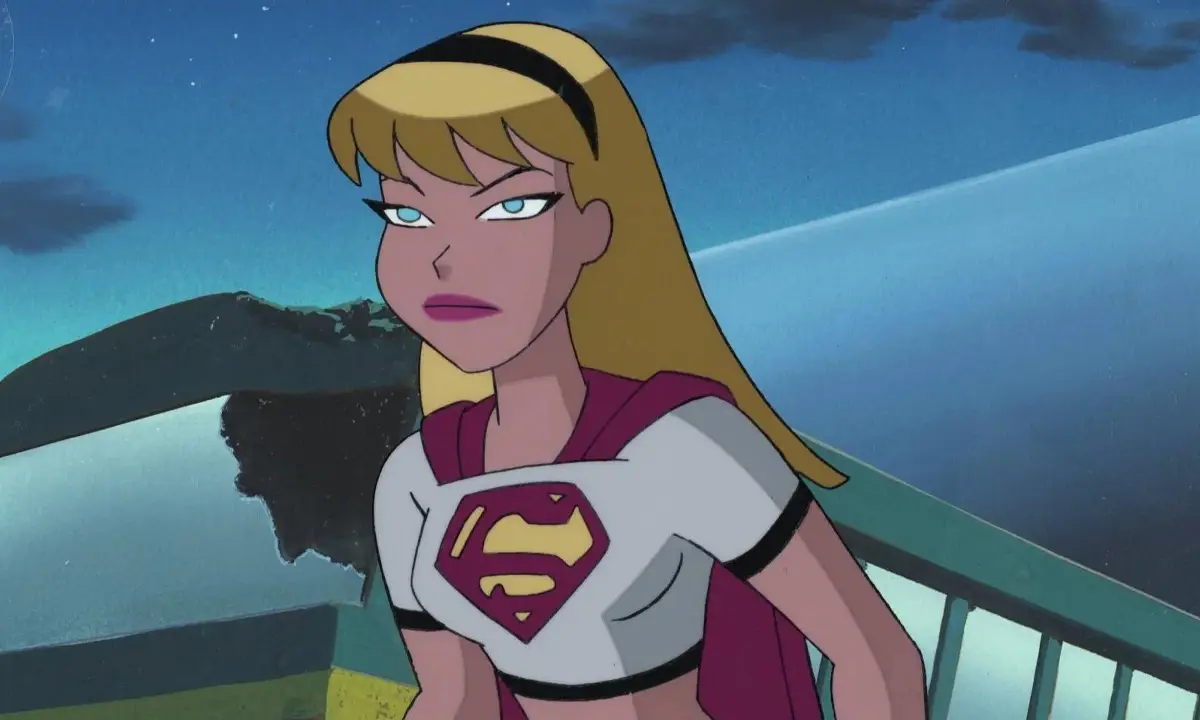
Supergirl’s signature brand of heroism has brought decades of feminism to superhero fans. She was given equal servings to her male counterparts, given the chance to shine and rival their long-heralded powers. After achieving everything they could, Supergirl could stand amongst the ranks of Batman and Superman – and even supersede them. Throughout her history there are sprinkled moments of role-reversal, where she was the saviour to her cousin or to Batman. And, her appearances in animation only made her strength, her altruism and her joy more accessible to younger fans.
Across her animated history, Supergirl painted the DC universe red and blue with pride. Facing off against major threats like Brainiac or Granny Goodness, her stories were always brimming with dire peril. She showed up in lego, in Teen Titan-style animation and in futuristic animation to teach younger audiences key, moral lessons. Kara taught them that it’s okay to feel hard feelings, that fortitude is needed in dark times and that friendship is the true key to endurance. Much like her cousin, she provided unwavering comfort to citizens in need – all whilst carrying the burdens of her lost planet, her lost parents. She was a symbol of hope, especially to younger female fans, craving representation.
From her TV debut in the 1990s to her current appearances in the 2020s, Supergirl’s TV history is rich and varied. Directors and producers have come and gone, as have voice actresses and fans – and each time, her story is told with sincerity and vigour.
Television
Supergirl’s journey through the realm of animated TV began back in the 1990s, where DC was making space for her in marvellous ways. After Steven Spielberg first approached developer Bruce Timm about an adventure cartoon, Superman: The Animated Series was conceived. A cartoon that ran for four years, it charted Superman’s life on Earth, as well as his tangles with cosmic threats. But, whilst Superman’s brawn and brilliance took the spotlight once more, a great portion of his tale was fronted by Kara herself.
Kara was introduced into Superman’s story in a special two-parter, in the show’s second season. Producer Bruce Timm recalled that they “actually had to steal two episodes from ‘Batman‘” – yet another sign that the world was finally opening up to the presence of a heroine. She debuted as a separate entity to Superman, not a relation of his at all. After Argo was knocked out of orbit by Krypton’s destruction, Kara was the sole survivor of suspended animation and Superman brought her to Earth. After recovering from her grief, she becomes Supergirl and, across her time on the show, faces aliens and billionaires in many epic battles.

Despite losing her relation to Clark, Kara is still almightily restrained by his presence. In her opening double-parter, Clark consistently tries to stop her from fighting with him, desperate for Kara to keep a low profile. However, all of this changes when Granny Goodness falls into the mix and Superman is kidnapped by the Female Furies. Supergirl adopts her moniker well – and reveals her suit in the heat and sweat of the fight. And, with Clark out of contention, it falls to Supergirl to not only rescue him, but defeat Darkseid and Granny Goodness. The episode ends with the front page of the Daily Planet, reading “Supergirl Smashes Intergang.” It showed the fans that, even in animation form, Supergirl was just as capable, just as powerful, just as tenacious as Clark – and she was only just getting started.
The early 2000s saw the introduction of a new series, Justice League: Unlimited – but it had a direct crossover from its 1996 forefather. In a Supergirl-centered episode entitled Fearful Symmetry, it is revealed that the series finale of Superman: The Animated Series had more impetus than fans thought. The scientists of the Legacy finale, who had been working on Project Cadmus, had acquired Kara’s DNA to make a clone of Supergirl, named Galatea. And Kara’s problems would only grow from there.
In the Far From Home episode, Supergirl is allied alongside Green Lantern and Green Arrow to aid the Legion of Super-Heroes. After being transported to the 31st century by several members, they are told that they must defeat the Fatal Five, who have mind-controlled the rest of the Legion. Fear mounts even further for Kara, as Brainiac 5 explains that 31st century history details that Kara never returns to her own time, following the mission – meaning that it is assumed she will die there.

Just like many of her previous entanglements, Supergirl’s next battle has an unreservedly sentimental quality to it. After entering the 31st century, it bears a resemblance to her lost home town, as many of its futuristic technology feels familiar to her. And, as is something of a canon event for the heroine, she yet again falls for Brainiac 5, which complicates things further. Alongside the rupturing events that threaten the future, Supergirl also has to contend with personal struggles, making her more relatable to younger audiences. She becomes conflicted about returning to a past she struggles to belong to, and her new romantic feelings add to her final decision of becoming a Legion member. Yet again, Supergirl was proven to be a heroine of physical tact – and emotional intelligence.
Entering the new decade, Supergirl’s appearances allowed for more traditional aspects of femininity to shine through. After a brief 2008 stint in Smallville Legends: Kara and the Chronicles of Krypton, a series of shorts in which she was the headlining star, the 2010s saw an immediate focus on female friendships. 2012’s Super Best Friends Forever followed the adventures of Wonder Girl, Supergirl and Batgirl, as they traversed the realm of adolescence. The trio would come to pass with epic villains such as Poison Ivy, Solomon Grundy – and still have time for joyrides in Wonder Woman’s invisible jet.

In a show focused on ‘girl power and the value of friendship,’ DC Super Hero Girls arrived in 2019, this time with a focus on six heroines. Wonder Woman, Batgirl, Supergirl, Zatanna, Green Lantern and Bumblebee meet at Metropolis High school and become ‘Super Hero Girls.’ It gave Supergirl the chance to connect with a younger female audience, as well as giving the character a more youthful, relatable feel. At last, Kara was allowed to not just be strong and a cousin to the brawny Clark – she could be a friend and have fun.
Many of Kara’s appearances in the 2020s so far have been short and sweet. She returned to the scene for many cameo presences, in shows such as Young Justice in 2022 and Harley Quinn in 2019. But, she has a current ongoing screen journey in the form of My Adventures with Superman. Beginning in 2023, the storyline returns to the heralded tales of Superman, this time with a close focus on the construction of his identity. The show follows the iconic trio, made up by Clark, Lois Lane and Jimmy Olsen, as they work together to suss out stories and save the day.
Supergirl stepped into the show in season 2, with an episode affectionately titled My Adventures with Supergirl. Yet again, Kara must draw on the strength of her peers as they return to Kandor to face-off once again with her arch nemesis, Brainiac. Her friends manage to help her overcome his attempts at brainwashing her, leaving her and Superman to once again conquer their foe. The cousins push Kandor further from Earth, using the sun’s energy to strengthen themselves before destroying Kandor, leaving Kara to eradicate Brainiac completely. The show’s third season is set to release on June 13th 2026 – with Kara now part of the trio protecting Metropolis.

In the episode’s final moments, it isn’t Superman that dubs his cousin as a protector – it is Vicki Vale who hands her the moniker. In a beautifully-fitting moment, Supergirl gains recognition from a fellow female character, who is another representation of strength and intelligence. And, in a world where men are still asking that these heroines ‘smile more,’ we can only hope that Supergirl keeps taking centre-stage to demonstrate why strong women are needed. They can be powerful, they can be smart, they can feel grief, they can fall in love – and all of these things make for a super-heroine that young girls can look up to with pride.
With Craig Gillespie’s new take on Supergirl dropping in cinemas on June 26, we can only hope that he will uphold these characteristics that are so central to the character – and have her kick-ass in the ways she has done all throughout her history. Whether it be animated or live-action, written or drawn, saviour or martyr, Supergirl’s lore has cemented her as an enduring heroine of immeasurable importance. And she will keep fighting the fight for many years to come.