

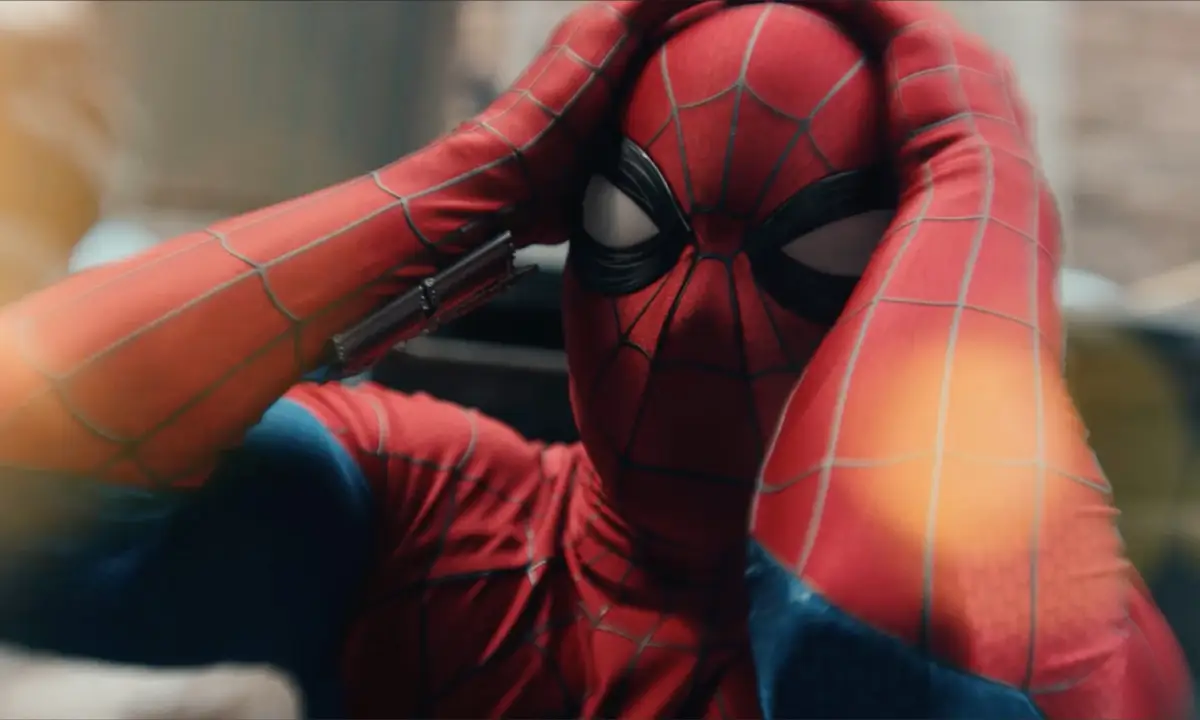
The biggest appeal of Peter Parker has always been grounded in his relatability. He is the ultimate everyman, a beloved superhero balancing his unfortunate secret identity life of rising rent, fractured relationships, and a guilt-driven past of loss. Yet, beneath the bright red-and-blue spandex lies a deeply unsettling body-horror premise: a radioactive arachnid bite completely rewrote his genetic code. While Peter usually reaps the physical benefits of this extraordinary genetic lottery, both Marvel Comics and the iconic Spider-Man: The Animated Series from the 90’s have dared to explore a dark psychological question: What happens if the human DNA mutates further?
The result of that mutation is the Man-Spider—a multi-armed beast that represents Peter’s absolute worst nightmare. With Spider-Man: Brand New Day’s trailers heavily suggesting this terrifying concept is about to make its live-action debut, I’ll be looking back at his extra mutation stages to reveal just how horrific it can become.
The Comic Origins: The “Six Arms Saga”
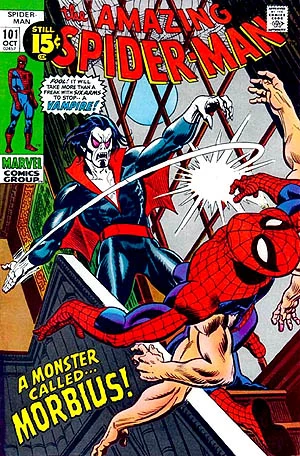
In the main Marvel Comics continuity (Earth-616), the concept of Peter mutating into a literal monster began not with an instantaneous, full-body transformation, but with an extra set of limbs. Writing in The Amazing Spider-Man #100-102 (1971), Marvel legend Stan Lee and artist Gil Kane created the “Six Arms Saga”. Desperate to rid himself of his powers and live a normal life with his first love, Gwen Stacy, Peter concocts and drinks a chemical serum designed to completely neutralize his radioactive blood cells. But instead of curing him, the serum acts as a catalyst, advancing his mutation and causing him to wake up with four brand-new arms that perfectly mirror the physical anatomy of an actual spider.
Unlike later television adaptations, comic-book Peter retains his full human intellect while dealing with his extra limbs. He remains the quipping, web-slinging hero, just with a massive wardrobe issue and a sense of shame. To resolve the crisis, Peter manages to reverse the mutation by teaming up with Dr. Curt Connors, who uses his laboratory to synthesize an enzyme found in the unique, un-mutated blood of Morbius the Living Vampire.
While the 616 Peter got lucky and restored his human biology, Marvel’s What If? #42 (1983) explored a tragic alternate timeline where the cure failed entirely. In that dark story, Peter rejects his humanity completely and flees into the shadows of New York’s sewer systems, and eventually mutates into a multi-eyed, spider beast. This tragic concept laid the exact narrative groundwork for television writers a decade later, shifting the story down towards a horrific psychological tragedy.
The 90s Animated Body Horror
The comic books at this point merely dipped a toe into the waters of body horror for Peter but for Spider-Man: The Animated Series it chose to dive headfirst into the deep end. During its second season, aptly titled “Neogenic Nightmare,” the show’s writers used a multi-episode arc to explore the literal degradation of Peter’s humanity. Peter’s powers begin fluctuating wildly because his radioactive blood is undergoing a massive, unstable cellular collapse. Seeking help from geneticist Mariah Crawford, Peter receives an experimental serum meant to stabilize his system. Just like in the comics, it triggers a catastrophic reaction, starting with the growth of the extra limbs. However, the cartoon takes the horror a massive step further by refusing to let the mutation stop there.
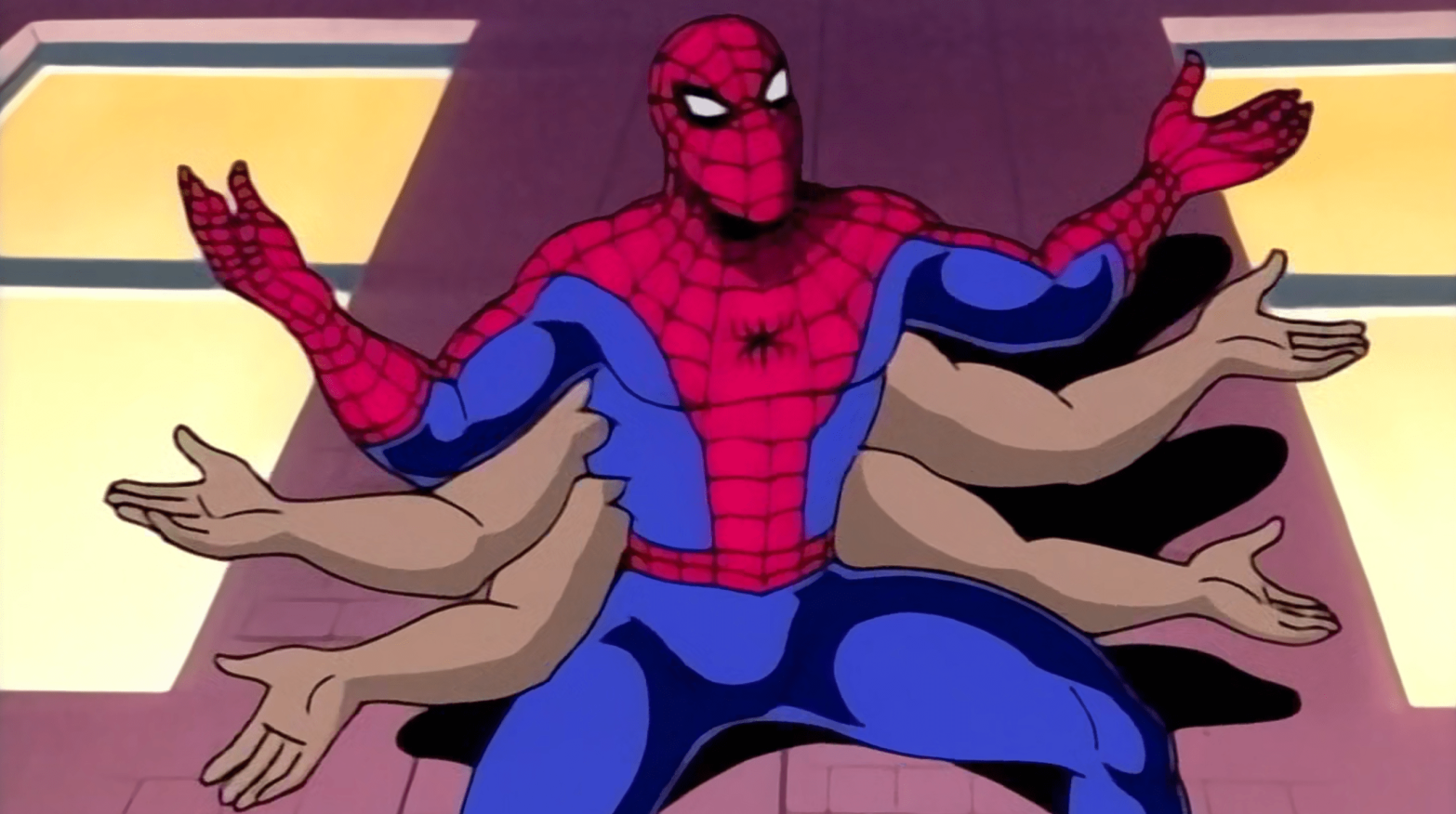
Over the course of the classic episode “Duel of the Hunters,” Peter’s human traits completely dissolve in a sequence that became pure childhood nightmare fuel for a generation of viewers. His skin turns a gray, his face splits open to reveal massive, dripping mandibles, and his eyes multiply into bulbous, glowing red orbs.
The animation team and showrunner John Semper Jr. relied heavily on atmosphere and suspense to sell the terror, largely due to strict 1990s tough television censorship laws. Because characters could not punch each other or draw blood on Fox Kids, the writers compensated by leaning entirely into psychological horror. The Man-Spider completely loses his mind to raw, animalistic instinct. He no longer thinks like a man, acting instead like an apex predator that spins massive webs in an abandoned bell tower and kidnaps his loved ones, like Mary Jane Watson, out of a twisted, protective urge. Instead of biting victims, he sprays a highly corrosive, acidic webbing that dissolves concrete and metal, making him an incredibly dangerous force of nature.

Frank Castle aka The Punisher is also brought into the story after believing the medias stories on Spider-Man.
This arc flips the roles too by forcing Kraven the Hunter of all people to cure Spider-Man using a new serum created by Dr. Crawford. This cure only temporarily lifted his mutation however as it kept him from mutating again under the condition that the took a serum every twenty-four hours.
When the Vulture got involved, his whole ambition was to restore his youth, and after an altercation with Spider-Man, absorbed his youth. He also absorbed the wall-crawler’s disease along with it though which effectively freed Spider-Man from his mutation for good, and he was no longer forced to take the serum.
Live Action Debut? Spider-Man: Brand New Day
The history of the Man-Spider mutation is no longer just a retrospective for long-term fans; it has suddenly become the most relevant talking point in the upcoming MCU film. With director Destin Daniel Cretton’s upcoming film Spider-Man: Brand New Day, Marvel Studios and Sony Pictures are heavily suggesting that they are pulling directly from this classic body-horror concept for Tom Holland’s next major outing in the Marvel Cinematic Universe.

The official synopsis and early promotional trailers paint a bleak picture of a Peter Parker who has spent four years completely isolated following the memory-wiping spell at the end of No Way Home. Operating as a full-time Spider-Man without a personal life, financial security, or the safety net of the Avengers, the immense psychological and physical toll of his lifestyle begins to manifest in a terrifying way. The promotional material mentions that the relentless pressure of his double life sparks a surprising physical evolution and a change in Peter he may not have the power to control. For fans of the 90s animated series, this specific wording serves as a massive, flashing red sign pointing directly toward his second mutation.

While we technically have seen nothing to suggest we’ll get the full Man-Spider appearing on the big screen, the trailers have given us enough to go on to suggest this is the direction the film will be going towards. While the film looks to be more street-level with it’s villain ensemble, bringing in Mac Gargan’s Scorpion and the crime boss Tombstone, we have still not been shown the full picture as to what is happening in Brand New Day.
“The villain that we have in this new movie, which is still very much a secret, is, I think, unlike anything we’ve seen in one of these movies before,”
Tom Holland

If Brand New Day follows through on these heavy narrative nudges, the true antagonist of the film might not be a traditional villain in a costume at all. Instead, Peter’s ultimate enemy in this new trilogy could be his own mutating body. Further evidence with introducing Jon Bernthal’s Punisher into the mix—the exact hero who famously had to hunt down and save a mutated Peter in the 90s animated story—the film seems perfectly set up to pay direct homage to that definitive storyline. It can transform a standard superhero flick into a deeply personal and deeply psychological struggle against the monster within, reminding us that the radioactive accident that birthed Spider-Man was just one genetic error away from creating a horrific monster.
