

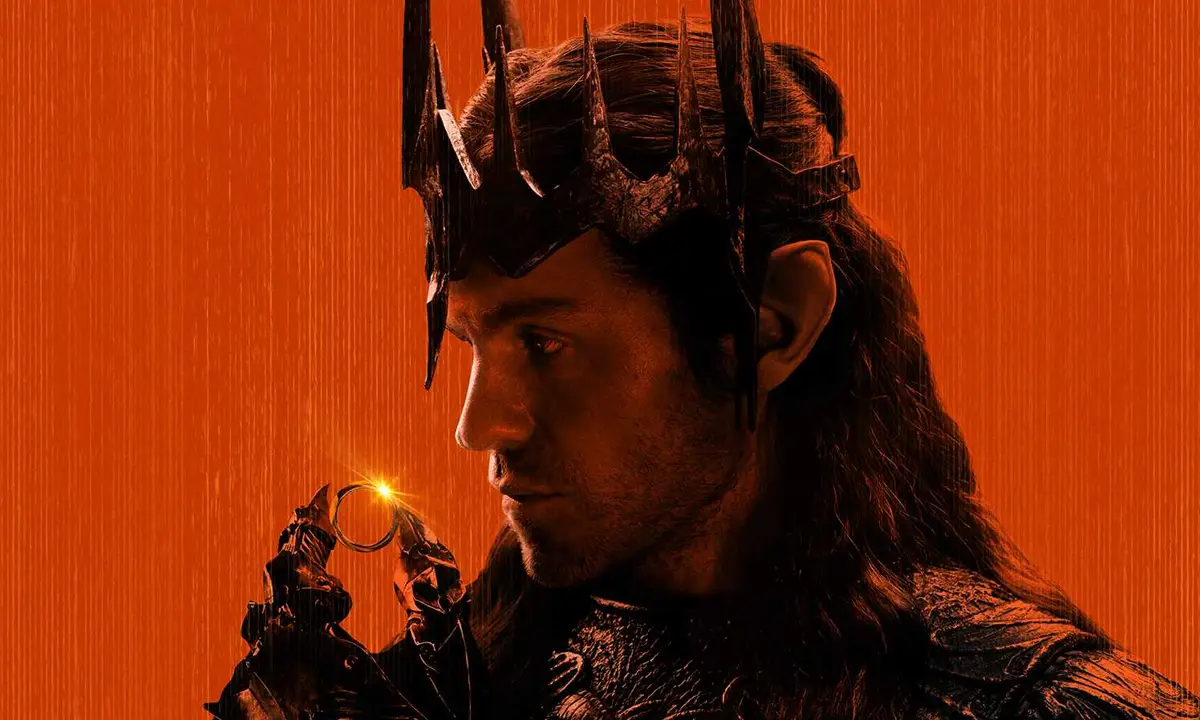
Episode 7 and the finale of The Lord of the Rings: The Rings of Power season 3 have officially landed on Prime Video and what a finale it was. But, we’re not here to talk about the finale. In a way, episode 7 was a much grander episode because of what it included and we were lucky enough to talk to director Stefan Schwartz about the episode’s central focal point… The forging of the One Ring; the One Ring to rule them all. Sauron has been seeking to forge his own ring from the very start and episode 7 gives us a visual adaptation of what that forging process may look like.
It’s safe to say that there was a lot of pressure to deliver something both cinematic and impactful- we say, job well done! The entire sequence in the heart of Mount Doom was stunning, but after talking to Schwartz about the creation of the episode, there’s this extra layer of appreciation and we’re so excited to be able to share what we learnt, so without further ado please enjoy this behind-the-scenes look into the crafting of Middle Earth’s most dangerous weapon…
Episode 7… What an undertaking! When you joined The Rings of Power and you knew what was coming, how did it feel to step into the director’s chair knowing how big episode 7 was in the grand scheme of things?
I mean, it’s incredibly exciting because it’s such an important moment for the series. It was also scary and daunting. All of Bilbo’s and Frodo’s journeys, so much rests on the creation of this ring. It was such a huge undertaking, but super exciting! And because of that, I spent a lot of time trying to figure out all the elements that I wanted to put into the creation of the ring because for me it couldn’t just be an anvil and a bit of hammering like the Alan Lee picture. I want it to be way deeper than that, and have its roots in a lot of different things. You know, my dad was a Jungian analyst and read Lord of the Rings many times, and talked about how archetypal it was, and I really wanted the creation of the ring to have a deepness to it. So, yeah, in approaching it, I sort of wanted to try and figure out all the elements that I wanted to get into that creation story in order to satisfy what I felt and what we felt as a team would would deliver the best experience and be truest to something that is not documented in any of the books.
It was such a unique and creative way of doing it. I remember watching, I watched it a little while ago, and I was just kind of blown away by the creativity of it, but also the cinematic scale of it. And I love what you mentioned that it couldn’t be the typical anvil. There was sort of a sentience to the ring, so could you talk me through how you came to that idea of how the ring was actually forged? Beautifully done, by the way! When you could see it slowly coming together, and it clicked what was happening. I absolutely loved it. I thought it was so so cool.
Oh well, you know we were worried that it would not go down well, but it felt true to me. So when approaching it, the key things that were in my head was that Middle Earth was created by music initially. There was a song that was created, and then Middle Earth was created from that song. And Tom Bompadil is all about songs, and singing is very much a theme within Tolkien. So I thought music was a really interesting theme within the creation of the ring, and that’s where the vibrations came from, and the idea of the hammer and the anvil, and the sound of that, and then also sacrifice… The idea that Sauron has to give all of himself, you know, his darkest side to this creation, and it ultimately kills him. But he is reborn in a way.
And then also that it isn’t just anywhere where he’s doing it; it’s Mount Doom. And for me, that was really important. Mount Doom was a part of the creation of the ring. It wasn’t just him. This mountain was giving back. So when he hit, the mountain took those waves and the sound, and then gave back. And those cymatics started to move that molten metal and to start to shape it. So it was a combination of Sauron and the mountain. It wasn’t just Sauron, and to me again, that was really important. That it was a connection because you know Frodo has to take the ring back to Mount Doom. It’s not just anywhere. It’s not just sticking it in a bit of molten rock and it’ll be fine. It has to be Mount Doom because that’s where it was created, so it was those ideas that helped shape it.
Then there’s the idea of having the right intention… So the scene right at the beginning was for me all about he goes to the mountain, he holds up the hammer, and he’s aggressive, and he shouts at the mountain, and the mountain just flings him against the wall, and that was just wrong. Go away. You can’t treat me like you treat elves, dwarves and orcs. We’re on a similar level, and I’m not going to take that from you. And then he goes to the Balrog, and the Balrog goes, “No, you have to meet and subjugate and absorb and have humility.” And then he goes back in, and that time round, he takes the hammer and he offers it up. It’s a very different thing, and he drops to a knee, and then the mountain starts to respond to him, and the lava drops and starts pouring down, offering him a way to melt this impossible gold and silver in the hammer. So, you know, the intention was that the mountain works with him and we wanted the mountain to feel. Of course, it’s magical, but there are these chambers where pressure can drive up molten rock that then falls down and can be superheated. So there was also intention to go. Could this happen within a mountain? And it definitely couldn’t happen like this. But you know, in our imaginations, it could. So it was the connection with the mountain, the idea of music, and the idea of sacrifice, and his mentality that sort of combined, and then it was building them into a structure of how he does each of those phases to finally die and be reborn in the cymatics of the waves coming and slowly realizing that it’s forming this ring.
I love the idea that Sauron has to not only sacrifice himself in body, but also he has to lower himself down to be on par with another being. And I never thought of it like that when I watched it, but it kind of makes so much sense. He’s so used to being in control of something or of other beings that it must be a massive sacrifice to be able to step down and be like, right, I’m on par with you. I offer this to you. The whole scene was just… I absolutely loved it so much, and it was such a visual treat as well. So, in that regard, when you were filming that scene, how did that sort of work as a construction to nail those elements?
It was complicated. We had a big piece of wall, but you know a big piece on a set, but tiny in terms of the scale of the room that we were creating, and then a promontory which I kind of taped out on the ground and walked down and went okay if it’s this far then you get thrown back this far, you worked it all out and then built this rocky outcrop but then it was also working with Jason (Smith of ILM) on the effects to go okay now we need to see for miles. This way is just a continuation of the curve, and then we built a very rough 3D model of it so that I could play that and see Charlie (Sauron) in it. So I could make frames and go okay. Because if you don’t have that, you tend to just keep close because you want to just see Charlie because that’s all you’ve got, and the rest is green. We’re going to be able to see the depths of Mount Doom. I can go wider here. So in terms of framing, that was really critical to be able to have even just a rough idea of how we had to Build the world of Mount Doom beforehand, so that I could see it as we were shooting it.
And then we had just big columns of lights, which were almost like LEDs that we could shine through red light or orange light that just animated up and over and back down these huge lights, which Gavin, our DOP, kind of figured out how to use and set up, and then these big wind machines and wind blasters. So I was sort of in the middle of it all, with a microphone, having talked Charlie through, you know, 20 different steps. You come in, you offer up the hammer, then you drop to your knees, and now you see all the lava dropping around you. Oh, but now you notice just a drop of lava from these little springs coming off from over there and over there, and you know, and I was sort of making up where they come from, and VFX would have to create them afterwards. But we just talked through and really tried to get those really high moments, and then breaths of really quiet moments. You know, when he pulls it out, and he doesn’t have enough metal, and then puts it back in, and when he walks around the anvil, and when he starts molding, and when he realises the reaction that he’s getting from the mountain… It’s working with him.
Like I said, it was such a cool element of the episode, And I personally thought it was executed so so well. Like we’ve been waiting for this moment for so long. Not just within the Rings of Power, but I guess as fans of Lord of the Rings in general and Tolkien. We’ve never seen it get made before. We’ve had ideas and interpretations of how it was forged, but to actually visualize it and see it there, I think is a really big moment for fans of the show and fans of the the lore as well. What sort pressure did that add? I mean, not only do you have that moment to dictate, you’ve also got the rest of the episode. So, what sort of pressures were you contending with?
I think, as I, as you know, as we started to discuss all these different elements, I became more and more Convinced that if we just gave fans the hammering on an anvil, it would be so disappointed. So I was getting more and more… We just have to jump. This is the way we’re going. And fans might like it, they might not, but I believe it. I believe this could be a way that the ring was forged, and it hasn’t just been. Oh, let’s just do it like this. It’s actually come from a lot of thought and a lot of you know thinking about how the different elements might fit together and how cymatics might play.
So I think by the time we got to shoot it, I was just fully committed and confident that I would just try and deliver the best version of this story that I could, with the most amount of emotion and really play with those moments of silence and those moments of intensity/ Especially when he finally gets understands… it’s almost like a conductor, you know, the mountain responds. And there was some beautiful shots from these two. What was it called? It was a film where it’s a husband and wife volcanists who in the end they died but there were some beautiful shots where they’ve gone up and it’s just this huge wall of lava and they’re in their metal suits just standing against it and… The power of these mountains, and so that was sort of an inspiration of some of the shots. I watched so much. You know, volcanic footage and experts, and then you see the scale of people in it, so I kept on wanting to jump out to show that scale, how tiny he is in this space, but then how he commands the space and almost conducts it.
Don’t forget to check out our interview with Sauron’s Charlie Vickers and Celeborn’s Jamie Campbell Bowers:
The entirety of season 3 of The Rings of Power is available to stream exclusively on Prime Video right now. A fourth season is currently in production and it looks as though Sauron has another grand scheme in the works… What could he be up to this time?
For more from the world of Middle Earth, click here.
