

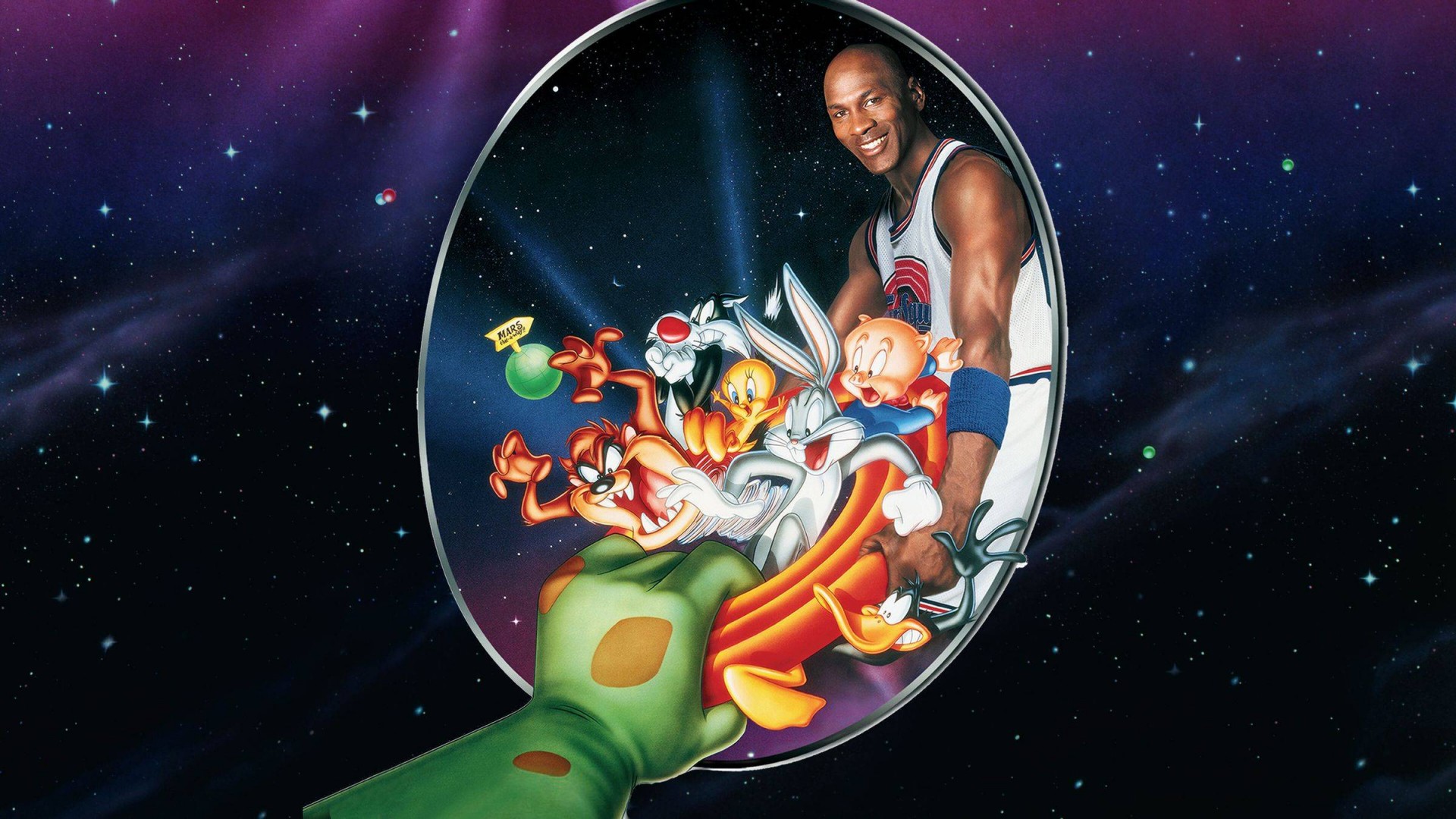
Back in 1996, young children were granted a small piece of cultural history, but one that has appreciated with time. This piece was none other than Space Jam. This classic film stands not only as a hit family comedy, but as a monument to peak mid-1990s culture and merging of two wildly different brands. It arrived at the intersection of sneaker culture, hip-hop, animation history, and unprecedented commercial synergy, proving that a feature length film could be built out of a shoe advert and still capture the imagination of an entire generation of kids for years to come.
The origins of Space Jam trace directly to a 1992 Super Bowl spot by Nike. The “Hare Jordan” commercial paired Michael Jordan with Bugs Bunny to pitch the Air Jordan VII. This is something that on paper might have been just a weird old advert lost to time. But the chemistry between Jordan’s charismatic personality and Bugs’s sharp wit was an instant hit, leading to a 1993 sequel ad set in space against Marvin the Martian. Jordan’s super-agent, David Falk, recognized that the concept was too powerful to remain confined to thirty-second television spots. When Jordan abruptly walked away from the NBA in the autumn of 1993 to pursue minor-league baseball, the narrative groundwork for a Hollywood redemption arc was accidentally born. Falk pitched Warner Bros. on a hybrid feature film that would address Jordan’s real-life sports sabbatical while giving the studio’s classic Looney Tunes roster their biggest cinematic leap since Who Framed Roger Rabbit.

Legendary producer Ivan Reitman was brought on and filming began in the summer of 1995 while Jordan was plotting his full-time return to the Chicago Bulls, the production required Jordan to spend weeks inside a massive green-screen soundstage surrounded by performers dressed in full green spandex suits. Jordan, accustomed to playing on tangible hardwood courts with absolute spatial awareness, found the process gruelling and disjointed. To accommodate his strict athletic routine, Warner Bros. constructed the now-legendary “Jordan Dome” on the studio lot. The climate-controlled, inflatable sports complex featured a regulation court, weight room, and entertainment lounge. Every afternoon, the studio lot transformed into the most competitive basketball venue on the planet, with Jordan inviting NBA royalty—including Reggie Miller, Patrick Ewing, Dennis Rodman, and Charles Barkley—into pickup games while the filming was still ongoing.

Meanwhile, traditional animation animators worked around the clock across multiple satellite studios worldwide to bring the cartoon cast into the live-action footage. Unlike modern digital compositing, Space Jam relied on traditional hand-drawn character frames that were carefully tracked against green-screen lighting, with digital airbrushing and simulated floor reflections applied to blend the 2D Looney Tunes characters with the live actors. The film also expanded the cartoon roster by introducing Lola Bunny, designed to provide a confident, hyper-capable member within the squad.

When Space Jam first premiered in November 1996, it shattered doubts about its corporate DNA. While journalists and reviewers did not like the film, the audience was entirely different. Grossing over $250 million worldwide against an $80 million budget, it became the highest-earning basketball film in history at the time. The film’s lasting impression, however, reached far beyond it’s Box Office figures. Its soundtrack was an industry juggernaut, certified six-times platinum and defined by peak anthems like Quad City DJ’s title track, Seal’s cover of “Fly Like an Eagle,” and heavyweight collaborations featuring B-Real, Coolio, Method Man, and LL Cool J. In fashion, the Air Jordan 11 “Space Jam” edition evolved into one of the most coveted silhouettes in modern footwear history, regularly igniting massive retro release lines decades later. Even the film’s promotional website—a pioneering artifact of early Web 1.0 featuring hand-coded HTML, starfield backgrounds, and low-res audio clips—was preserved untouched by Warner Bros. for decades, becoming a sacred online museum even to this day!

Three decades on, Space Jam endures because it captured an unrepeatable cultural space. It arrived at the exact moment when Michael Jordan transitioned from superstar athlete to global icon, backed by Wayne Knight’s comedic grounding and Bill Murray’s deadpan meta-humor and the vocal talents of Billy West, Dee Bradley Baker, Danny DeVito, Bob Bergen and Bill Farmer bringing the animated characters to life. While the 2021 sequel leaned far too heavily into modern algorithmic multiverse IP, the 1996 original retains its charm precisely because it was earnest in its absurdity. It had fun with the concept, and did not try to work as a way to promote 30+ other brands and successfully built a bridge between Saturday-morning cartoon icons and real-world NBA stars, cementing its status thirty years later as one of the quintessential pop-culture time capsule of the 1990s.
