

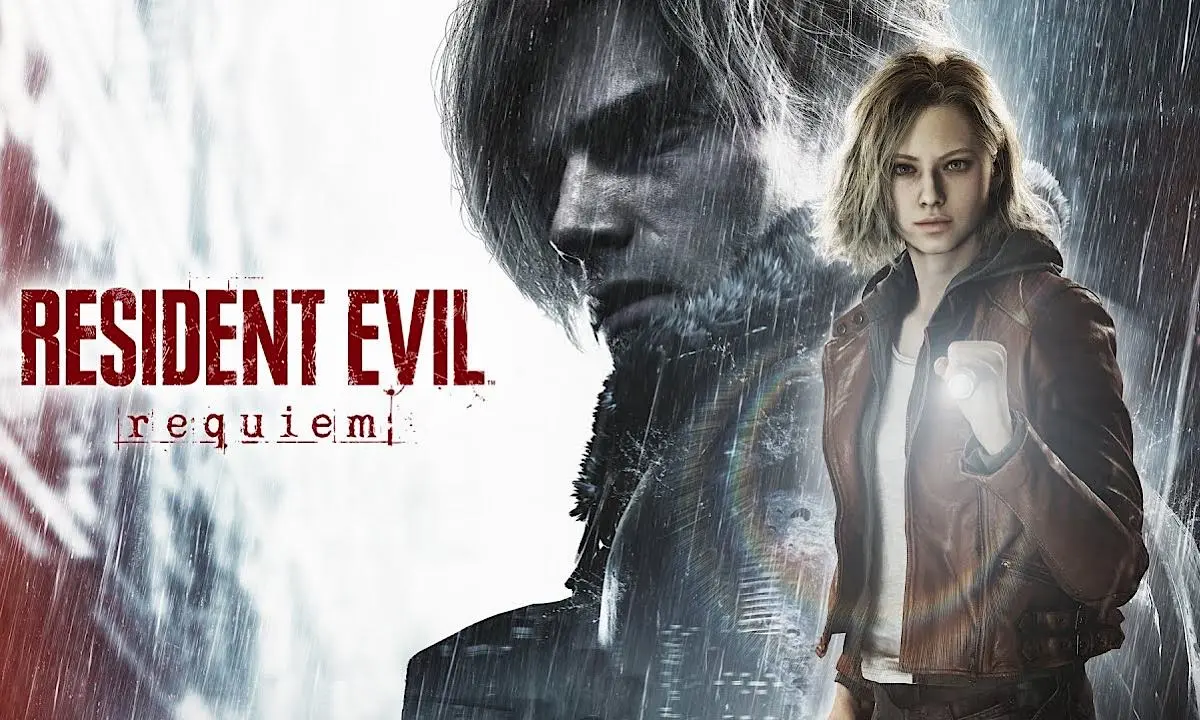
Resident Evil Requiem is available to play now on PlayStation 5, Xbox Series X|S, Nintendo Switch 2 and Steam.
Synopsis
Set 28 years after the events of Resident Evil 2, Resident Evil Requiem sees Grace Ashcroft and returning protagonist Leon S. Kennedy face untold horrors that test them to their limits, revealing old wounds tied to the Raccoon City incident.
Review
The latest title in the Resident Evil franchise, which started all the way back in 1996 on the Sony PlayStation blends over three decades of iteration into one concise, tense, and bombastic instalment. Resident Evil Requiem takes place in 2026, twenty-eight years after the horrifying events of Raccoon City, which was the focus of Resident Evil 2 (1998) and its remake (2019). The game brings back fan favourite protagonist Leon S. Kennedy and introduces Grace Ashcroft as a new playable character to the franchise, as both must contend with new horrors and revisit old memories.
There are essentially two games squashed together here, which is fitting for the two protagonists of the game. Grace’s sections focus on the survival horror gameplay of earlier Resident Evil titles; ammo is scarce, enemies are punishing, and it really puts you on the back foot immediately. You really feel out of your depth playing as Grace, but if you’re a Resident Evil fan, this type of gameplay will be all too familiar as you have to pick your routes wisely, pick when to fight and when to flee, and if you play on the normal (classic) difficulty mode as opposed to normal (modern) then, like older titles, ink ribbons used to save take up slots in your inventory, so you have to choose whether you want to risk not saving. The zombies also pose a significant threat, with multiple stalker type enemies roaming certain corridors, always on the lookout for brains to eat.
The sections with Leon focus more on action; you have a variety of moves to dispatch enemies, and the combat is all about movement and placement, which did take a bit of time to click for me, but when it does click, you can go through waves of zombies in a flash. Leon also comes equipped with a hatchet that can be used to stun enemies and deal quick attacks up close before moving further back to dealing a killing shot. Leon’s section is probably the most mechanically intensive in terms of gameplay, as you can aim at zombies’ legs to stagger only to deal melee damage with a prompt. Enemies will also carry weapons that you can pick up and swing briefly. Some will even be carrying chainsaws that you can pick up and go full Dead Alive on zombies with.
Both sections are expertly paced and woven with each other. Early on, Grace’s sections are intercut with short blasts of explosive action with Leon, giving you a palate cleanser after the intense horror-focused gameplay. There is a section later in the game where, as shown in the trailers, you revisit the Racoon Police Department, the place where it all started for Leon 28 years ago. This section feels very reminiscent of Snake’s return to Shadow Moses in Metal Gear Solid 4, where you walk around a crumbling ruin, remembering the past games as both character and player. It’s brilliantly ambient, that’s elevated by the score that has stings and cues from the original Resident Evil 2, but warped and faded, like the current state of the building you explore. It’s dripped with nostalgia.
With both characters you can craft a variety of items, and, whilst I personally didn’t take full advantage of the crafting mechanic, it is something that you should be constantly utilising, especially if you want to use all of the craftable items to test on the varied enemies you encounter.
It’s also worth noting that the game looks incredible; graphics technology sure has come a long way since the first PlayStation. Whilst it is short (my playthrough clocked in at around 10 hours). It does leave you wanting more, and the unlockables that are earned by completing in-game challenges will require multiple playthroughs to complete. It’s something special when you feel giddy after finishing one playthrough, where you just want to go back and replay all over again.
That’s not to say the game is perfect, far from it, but its best bits far outweigh its worst moments. One section of gameplay seems to be at odds with the mechanics. The section in question is with Leon, and you’re taught early on that movement and placement are the key mechanics and not third-person cover-based shooting. I won’t spoil it, but when you get to it, you’ll understand what I mean.
I also found the inventory management an issue, or rather not an issue, especially with Leon’s gameplay. Like his combat mechanics, Leon’s inventory is all about item placement, making sure you can squeeze as many items as possible into your case, reminiscent of Resident Evil 4 and Resident Evil 8. However, I didn’t need to think about item placement at all. Besides one instance during my first playthrough, Leon can carry practically everything you pick up and you are going to use more items than needed to fill his inventory anyway, so the mechanic almost seems superfluous.
I won’t spoil the story for anyone who is still waiting to play it, but while its story is bombastic and sometimes campy and full of action, at the heart of it is a tale about legacy. That’s one of the major themes on display; legacy, not only the legacy of some of the characters involved in the story, but also the legacy of the franchise itself as it moves further on in the decades. The game weaves this theme even on a meta level by blending three decades of gameplay iteration together, bridging the gap between legacy gameplay and its more modern mechanics.
Verdict
Resident Evil Requiem is far from a perfect game, but it is a damn good one. There’s lots to love as it expertly blends three decades’ worth of gameplay into one game, and when the end credits roll, it’ll leave you wanting more.
⭐⭐⭐⭐
