

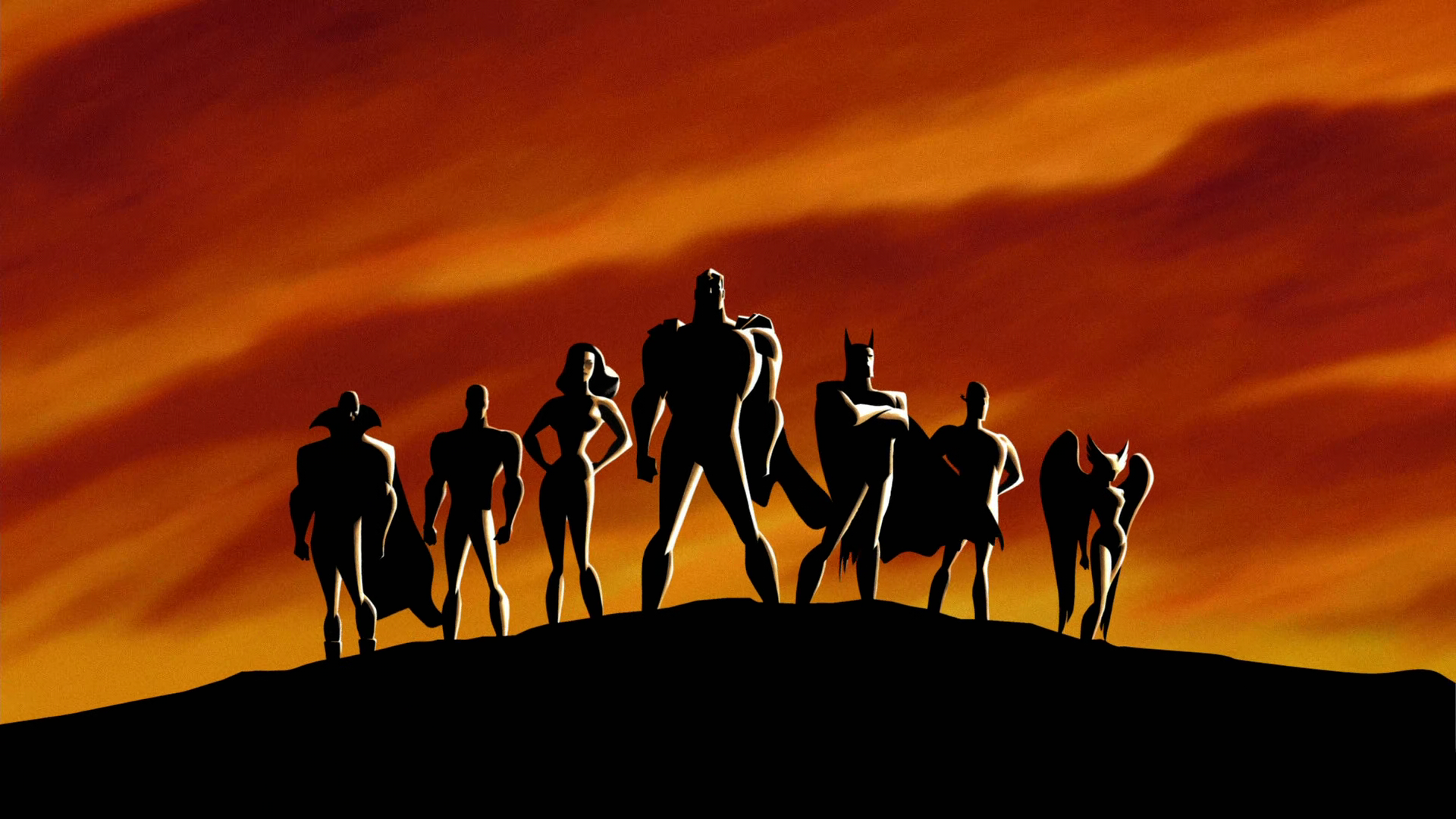
Justice League first debuted on Cartoon Network in November 2001 with the three-part epic “Secret Origins,” it was celebrated as a huge milestone for DC’s animated shows. Yet the true magic behind its immediate praise was not simply the multi cape spectacle of seeing seven heroic icons standing shoulder-to-shoulder at earth’s greatest threat. It was the fact that the work had been cultivated for nearly a decade prior. Long before the modern entertainment industry became obsessed with cinematic universes, post-credits teasers, and manufactured synergy across multiple platforms, Bruce Timm, Paul Dini, Alan Burnett, and their collaborators built an interconnected continuity organically—one frame, one shadow, and one orchestral chord at a time.

To understand why Justice League came together as well as it did and not just another crowded toy advert, the story has to begin long ago in 1992, in the dark alleyways of Gotham City where a young boy witnesses the death of his parents at the hands of a street thug.

Batman: The Animated Series was an act of quiet defiance against the pre established rules of the animation industry for Saturday morning television. Where standard network programming favoured neon palettes, limited animation, and overt commercialism, Timm and co-creator Eric Radomski pioneered what they called “Dark Deco.” By insisting that background artists paint on black paper instead of white, they created this unique world fit for the Dark Knight. Matched with Shirley Walker’s sweeping orchestral scores and the casting genius of Andrea Romano—who established the late Kevin Conroy and Mark Hamill as the definitive vocal talents of Batman and the Joker—the series treated comic book mythos with pure sincerity. Masterpieces like “Heart of Ice” demonstrated that a once disposable villain could be reinvented with Shakespearean tragedy, while the cinematic release of Batman: Mask of the Phantasm in 1993 made it clear that this animated Gotham could stand side by side with it’s live action counterparts.

The universe could not remain trapped in the dark streets of Gotham forever, however, when in 1996, the creative team faced an entirely different challenge: Metropolis. Where Gotham was an atmospheric period piece of perpetual night, Superman: The Animated Series required the soaring, sunlit optimism of the 1930s machine age. Rather than simply transposing Batman’s aesthetic, Timm and his crew developed an aerodynamic, streamlined visual style. Tim Daly’s Clark Kent possessed a warm, Midwestern sincerity that balanced Dana Delany’s razor-sharp Lois Lane. More crucially, the series expanded the universe’s pre built roots from urban criminals to cosmic foes. Introducing Jack Kirby’s Fourth World, Michael Ironside’s terrifyingly cold Darkseid, and the alien android menace that was Brainiac who all weighed the scales of where this universe could go.

The watershed moment arrived in the 1997 three-part crossover “World’s Finest.” When Batman tracked the Joker to Metropolis, the creative team pulled off a narrative magic trick. Instead of flippantly forcing the two heroes into a cheap and tacky story, it instead made their fundamental differences into the perfect hero duo. Bruce Wayne’s paranoid tactical cynicism contrasted against Clark Kent’s moral clarity, yet their mutual respect formed an unbreakable foundation. “World’s Finest” proved that the conflicting tones of the show could blend beautifully in tandem.
Superman: The Animated Series expanded the world more when it introduced heroes like The Flash, Green Lantern (the Kyle Rayner version), Supergirl, The Legion of Super Heroes and many more. Most of which would go on to play larger roles in the Justice League series. On top of the heroes, the series gave us a plethora of villains which would keep returning in the Justice League cartoon, including Darkseid (voiced by the iconic Michael Ironside) and arguably the peak version of Lex Luthor to every grace our screens (played by the hugely talented Clancy Brown).

The late 1990s served as an era of daring evolution for the Timm-Verse. Batman Beyond in 1999 took an enormous creative gamble that defied expectations. By thrusting an aging, isolated Bruce Wayne into a cyberpunk Neo-Gotham and passing the mantle to a completely original character Terry McGinnis, the creative team proved that their universe was not frozen in place. It had a living, breathing history, where actions had permanent consequences and mentors eventually grew old. Concurrently, series like Static Shock broadened the cultural landscape in its present day. Virgil Hawkins’ adventures in Dakota City grounded superheroics in modern teenage reality, and his frequent crossovers with the other shows all affirmed that the Timm-verse extended into every corner of urban life. Static Shock would give us crossovers with Batman, Batman Beyond, Superman and the Justice League. All the time, giving young fans a DC hero to idolise much like Marvel had with Spider-Man. It was a show that also was a good, healthy way to tackle teenage and cultural issues at the time including a gun violence episode and more than a few centred around racism.

As an honorable mention, the Timm-Verse did have another futuristic spin off from the Batman Beyond. The Zeta Project (2001) stands as the DCAU’s only series driven entirely by original characters rather than pre-existing DC comic icons. Created by Robert Goodman, the sci-fi fugitive story follows Infiltration Unit Zeta—a lethal government synthoid who develops a conscience, rejects his programming, and goes rogue alongside runaway teen Ro Rowan to find his creator and prove his innocence. Pursued relentlessly across a sleek future landscape by dogmatic NSA agents who view his morality as a rogue malfunction, the series combined classic Fugitive-style road-trip dynamics with existential cyberpunk themes. However, caught between the darker neo-noir edge of Batman Beyond and Kids’ WB’s broader pivot toward lighter anime desires, the show struggled to cement a strong broadcast identity and was quietly cancelled after two 26-episode seasons, stranding Zeta and Ro’s quest on an unresolved cliffhanger.

By the time Justice League arrived in 2001, the creators were not asking audiences to buy into an abstract concept set in a new world; they were cashing a check written across hundreds of previous episodes. Even the deliberate roster choices reflected a commitment to narrative friction over Silver Age nostalgia. The decision to bring in John Stewart instead of Hal Jordan gave the team a grounded, military backbone, voiced with firm moral weight by Phil LaMarr, while simultaneously providing vital representation. For many millennials, John Stewart became THE defining Green Lantern, overshadowing all those who came before or after. Swapping Aquaman for Hawkgirl also introduced a fierce, mace-wielding female warrior who helped balance out the gender divide on the team and whose alien loyalties would eventually serve as the emotional fault line of the entire series. Alongside Conroy’s veteran Batman, George Newbern’s evolving Superman, Susan Eisenberg’s regal Wonder Woman, Michael Rosenbaum’s lighthearted and quippy Wally West, and Carl Lumbly’s mournful Martian Manhunter, the core seven felt less like an unassailable pantheon and more like an ideological powder keg of raw power and talent.

The genius of Justice League lay in its refusal to wrap complex geopolitical and moral dilemmas into neat twenty-minute packages. By committing almost entirely to 2 and 3 part arcs, the writers gave the stories room to breathe. They were keen to adapt stories told in the comics but better fitting to the world they created. Episodes like “A Better World” introduced the totalitarian Justice Lords which were clearly based off the Crime Syndicate stories but done with a twist as it held up a mirror to the heroes and planting the seeds of existential doubt that would continue on in the series much further down the line with Amanda Waller when she asks: what happens when gods decide that order is more important than liberty? That moral complexity came to a head in the devastating Season 2 three part finale, “Starcrossed.” Hawkgirl’s betrayal on behalf of her Thanagarian people was not a cheap plot twist; it was a devastating collision of duty, romance, and national identity that left the League fractured and the Watchtower in ruins.

Rather than collapsing under the weight of that finale though, the series evolved into Justice League Unlimited in 2004, opening the floodgates to the wider DC pantheon. What could have easily degenerated into empty fan service instead birthed the high-water mark of serialized superhero storytelling: the Project Cadmus arc. For an entire season, the overarching story interrogated the League’s unchecked authority through the eyes of ordinary humans and government operatives like Amanda Waller. Superman’s unchecked power, Batman’s obsessive contingency planning, and the lingering public trauma of numerous invasions dating all the way back in Superman: The Animated Series. All of these conflicts built up over years and years resulting in the introduction of the clone of Supergirl named Powergirl and the Ultimen (a team that were a clear nod to the old Super Friends series). The League was ultimately forced to confront the chilling possibility that humanity had every right to fear them as they orbited the planet in their Watchtower.
Even introducing heroes without abilities such as Green Arrow, The Question, Huntress and many more who would push the enhanced heroes to think about how the general public feel. The stories were mature for a Saturday morning cartoon and kept fans hooked on the morality questions of their heroes.

Justice League Unlimited had shifted away from the original runs storytelling and focused more on single episode stories, but also gave way to giving lesser known heroes time to shine. Giving us unique team ups, deeper perspectives into the Timm-verse and allowing light DC fans a chance to meet new heroes.
It did however delve into long season wide storytelling and granting us a 4 part finale at the end of the first season of Justice League Unlimited. It gave fans a full feast across all the episodes, including a full battle on Watchtower with all the lesser known heroes going toe to toe with a clone army of Ultimen and Powergirl while the original 7 Justice League members teamed with Amanda Waller to take down Lex Luthor and his plans, revealing an unfinished plot point from the previous season where Braniac had implanted himself inside of Lex and fused them to create a world ending threat.
The finale gave us the Flash’s grand sacrifice moment taking down Braniac, saving Lex Luthor and almost dying in the speedforce before his friends bring him back.

It felt like the end of the series, with the original 7 deciding to disband the Justice League, before Green Arrow (the hero most reluctant to join at the first episode of JLU) calls them out that they will carry on without them if need be. This results in the new HQ being placed squarely on earth and kicking off the final season.
This ambitious universe of storytelling reached its thrilling, apocalyptic finale titled “Destroyer”. When a resurrected Darkseid—fused with the remnants of Brainiac—launches a full-scale assault on Earth, the show throws aside standard superhero protocol to stage a desperate global battle royale. In a masterclass of earned character payoff, the remnants of Lex Luthor’s Legion of Doom are forced to march into the Metro Tower and strike an uneasy truce with their sworn enemies, summarized with grim reminded by Atomic Skull of all people declaring: “Hey, it’s our world too!” The resulting conflict is an unbridled, planet-wide melee where heroes and villains fight shoulder-to-shoulder across the ruins of Metropolis, Paris, London and across the planet, but the emotional core remains intensely personal.
We’re given a cameo fest in blink and miss it shots, seeing characters from all the shows pasts cropping up in the fights. Old friends returning, villains helping the heroes in unique combos and the episode just not letting up on the violence.

On the shattered streets of Metropolis, we are given a truly defining Superman moment. Pushed to his limits by Darkseid, Superman delivers his legendary “world made of cardboard” monologue, confessing the agonizing, lifelong burden of constantly pulling his punches so he doesn’t accidentally pulverize the fragile people around him—before brazenly letting loose with a shockwave punch that sends the New God through half a dozen skyscrapers across the city before smashing him into the ground below. Not to be overshadowed however, we also get Batman performing the near-impossible feat of dodging an an Omega Beam, earning a rare admission of shock from Darkseid himself.
Yet in true Timm-verse fashion, pure brute force does not win the day. The salvation of the human race ultimately rests on the ultimate human narcissist, Lex Luthor. Having braved the incomprehensible vastness beyond the Source Wall (Galactus cameo in the wall btw), Luthor returns clad in a three-piece business suit to present Darkseid with the universe’s forbidden prize: the Anti-Life Equation. In a climax of poetic irony, Supermans greatest villain saves the planet not out of altruism, but through an intellect and ego vast enough to comprehend what even gods feared to touch.

We say goodbye to our Justice League and it’s heroes, villains and characters in one final rush to the screen as all of them we have come to love over the years race off to capture the escaping villains. In the words of Wonder Woman herself, “the adventure continues” even if we no longer get to watch them.
The enduring legacy of the Timm-verse, a quarter of a century after the Justice League first assembled, is that it never treated animation as a lesser medium or its audience as disposable consumers of toys. It succeeded because it treated continuity as an earned emotional history. Every battle left a scar on these characters, every crossover advanced the world, and when those seven heroes stood together against the dark, audiences believed in them because they had watched them earn their place in the history books.

DC has never quite managed to replicate the success and depth that the Justice League series did, the closest we had was the Young Justice series which lost it’s way in its latest seasons as well as DC Universe Animated Original Movies starting with Justice League: War (2014) and ending with Justice League Dark: Apokolips War (2020). We did however dabble back into the DCAU a few more times in a few animated films.
Both Batman and Harley Quinn (2017) and Justice League vs. the Fatal Five (2019) have the same style, voices and universe although their timeline is loose at best. We also had one final sighting of the DCAU in the third part of the animated Crisis on Infinite Earths trilogy. While brief, it was also the final performance of Kevin Conroy as Batman. I would be doing a huge disservice if I did not bring up the iconic performance of Kevin Conroy as Batman.

Conroy did not merely play the character; for multiple generations, he simply was Batman. His Bruce Wayne was a charming, slightly breezy social man, while his Batman was a calm, resonant baritone that commanded absolute authority without ever needing to shout. When Conroy passed away in November 2022, it felt like an irreplaceable pillar had fallen in superhero pop culture.
Yet fate afforded him one final, poetic bow. In the 2024 animated feature Justice League: Crisis on Infinite Earths Part Three, audiences were treated to a brief, poignant glimpse into the Timm-verse reality, dubbed here as Earth-12. As the sky burns red and the antimatter wave races to obliterate all existence, the classic Bruce Timm-styled Gotham appears one last time. Batman is trading blows on a skyscraper ledge with Mark Hamill’s Joker. When the Joker mocks him—flattered that Batman chose to spend the end of the world with his mortal enemy—Conroy delivers his final recorded lines as the Dark Knight: “I care, Joker. About Gotham. About justice. And if it has to end, at least I go out like this… being Batman.” It was a stunningly meta, bittersweet farewell that served not only as this version of the character’s final stand, but as Conroy’s own parting statement to the mythos he defined: resolute, defiant, and dedicated to the mission until the very end.

Looking back from the vantage point of this 25th anniversary, the enduring triumph of the Timm-verse lies in an achievement no modern television franchise has quite managed to replicate. The DC Animated Universe never chased trends, nor did it treat its storytelling as mere connective tissue leading to an inevitable corporate crossover. Instead, Bruce Timm, Paul Dini, Alan Burnett, and an army of passionate artists, writers, and voice actors treated the animation with the dramatic weight of classic cinema. They proved that children’s programming did not have to talk down to its audience, delivering stories where grief lingered, morality was rarely good vs bad, and heroism was defined by endurance of struggles and not little moments.
When the Justice League first came together in 2001, their watchtower was the hub to a decade of earned emotional equity. Because we had spent years hiding in the shadows with Batman, soaring through Metropolis with Superman, and learning about the world through the youthful eyes of Virgil Hawkins, their triumphs and tragedies carried genuine weight. The Timm-verse achieved the ultimate feat of adaptation: it did not simply reflect DC Comics; it redefined them, setting an untouchable baseline for what these gods and mortals could be. Long after the broadcast signals have faded and trends have cycled through Hollywood, that gleaming Watchtower in orbit remains the definitive benchmark—a masterclass in serialized worldbuilding that reminded us why we look up to the sky in the first place and were inspired to be better, do better and embody the heroes that we watched as children.
