

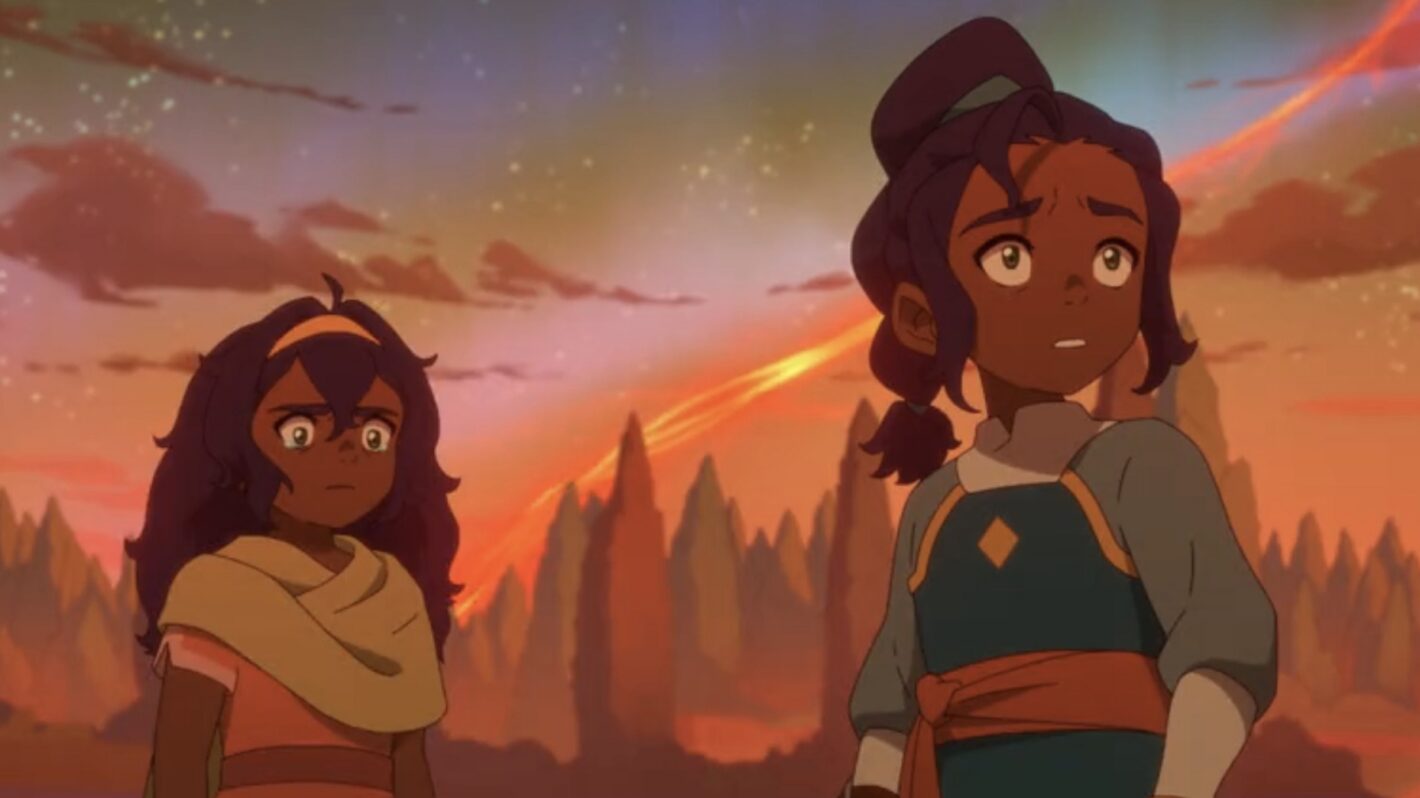
Avatar: Seven Havens Book 1 is available to stream now, exclusively on Paramount+.
Review
Ever since Michael Dante DiMartino and Bryan Konietzko introduced audiences to the elemental nations in 2005, the Avatar universe has stood as a monumental benchmark in modern Western animated storytelling. Avatar: The Last Airbender went beyond its Saturday morning roots by weaving an epic, deeply philosophical coming-of-age journey against the backdrop of a century-long imperial war. Through Aang’s balance of youthful innocence and crushing destiny, paired with masterclasses in redemption like Zuko’s tragic arc, the original series demonstrated how serialized animation could effortlessly marry profound spiritual lore, authentic martial arts disciplines, and resonant thematic depth. It was a complete, lightning-in-a-bottle narrative that set an impossibly high standard for Western children’s television.

Seven years later, The Legend of Korra proved the story was bold enough to grow alongside its audience rather than coast on nostalgia. Transporting the world into an industrialized, steampunk-tinged era of jazz-age progress and ideological conflict, the sequel series traded open-road wartime survival for urban political friction, examining equality, extremism, spiritual detachment, and personal trauma. Bolstered by Studio Mir’s breathtaking, peerless animation and complex, morally ambiguous enemies, Korra’s journey reasserted the world’s enduring relevance by daring to disrupt its own sacred rules. Decades of rich world-building, spiritual heritage, and stylistic evolution laid an extraordinary foundation—one that naturally carries immense expectations for any successor brave enough to take up the mantle.
Now, in 2026, we are back in the world of Avatar, and boy, is it a different landscape from the one we left with Korra back in 2014!
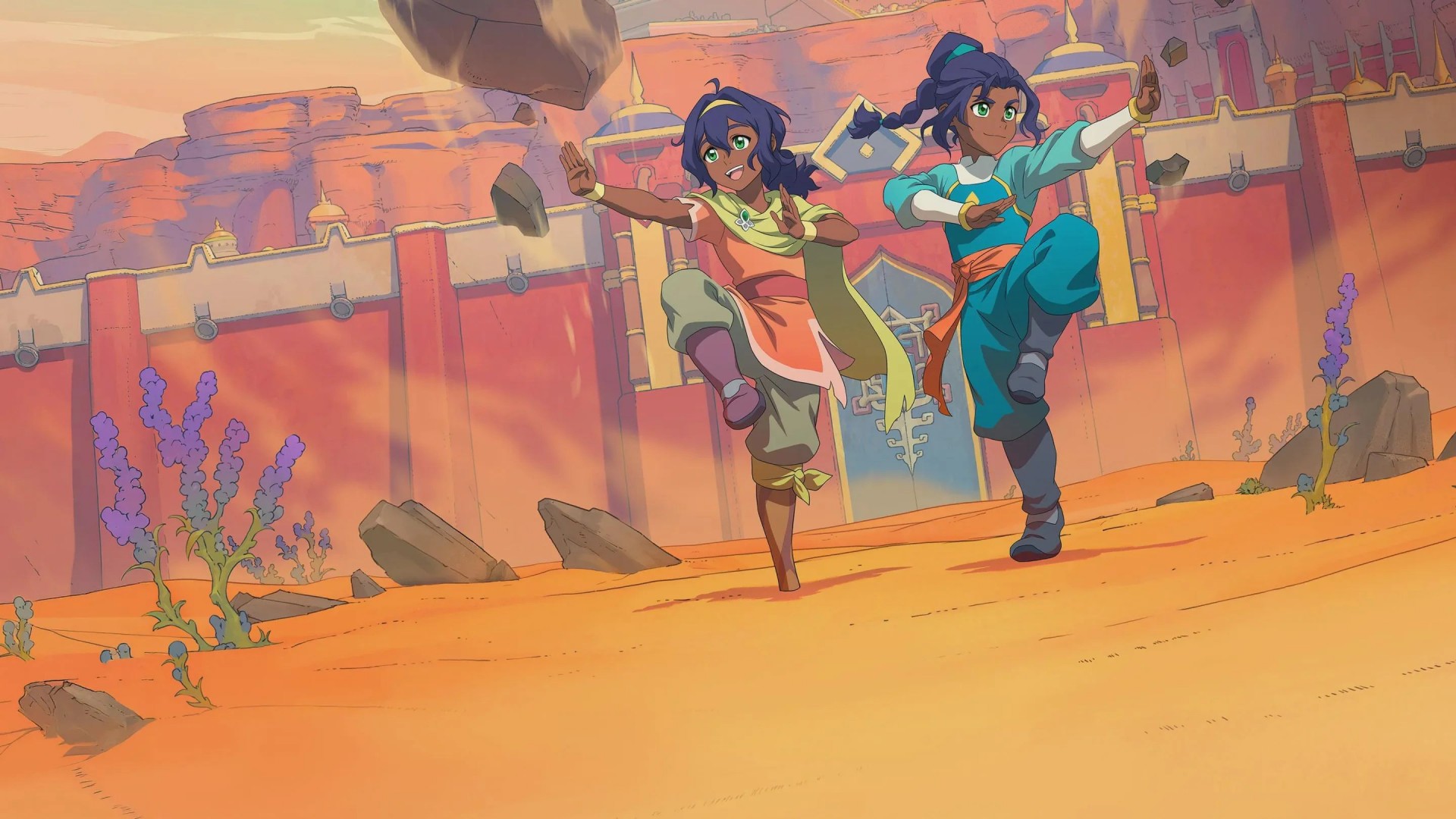
Set in a fractured, post-apocalyptic era over 200 years after Korra’s death, Avatar: Seven Havens introduces viewers to a world where civilization has retreated behind the walls of seven fortified strongholds. The series chronicles the intertwined journeys of twin sisters Pavi and Nisha, two young girls navigating an unforgiving, hostile society. Far from being revered as legendary peacekeepers, the Avatar is now remembered with deep-seated fear—fed by a prevailing belief that Korra caused the world to collapse into the state it is in today. The other major turn this series takes is that Pavi and Nisha share the mantle of the Avatar, an unprecedented twist in its recorded history. Forced to conceal their abilities while confronting relentless challenges, militaristic rulers, and ancient corrupted spirits, the twins embark on a journey to hone their gifts, unravel the truth behind their shared title, and uncover the catastrophe that shattered their predecessors’ peace.
The writing establishes an immediate, gripping mystery for returning fans. What happened with Korra that caused the world to fall into such ruin? Beyond that central enigma, fragmenting the core Avatar mantle across twins allows the story to explore spiritual and philosophical tensions that previous Avatars had to tackle entirely in isolation. Pavi is clearly the more peaceful of the two, reluctant to embrace the title and far more inclined to investigate their family’s past and discover what happened to their parents. Meanwhile, Nisha is intensely goal-oriented, determined to master the Avatar’s duty and save the world from its current plight. This ideological divergence turns their sisterhood into a poignant struggle for harmony amid their tangled fates. The rest of the ensemble cast is equally layered, populated by flawed allies and ideologically driven antagonists who avoid simplistic moral binaries. The Avatar franchise has always excelled at presenting complex adversaries whose core philosophies raise valid points, even if their methods are monstrous. Far from merely serving up empty nostalgia, the series deftly balances callbacks to the earlier shows while keeping the narrative approachable for newcomers. That being said, I do wish we had received more concrete answers regarding what Korra did to trigger this fallout. It is something we will no doubt uncover in future seasons, but as an ardent fan of The Legend of Korra, I am dying to find out what truly transpired.
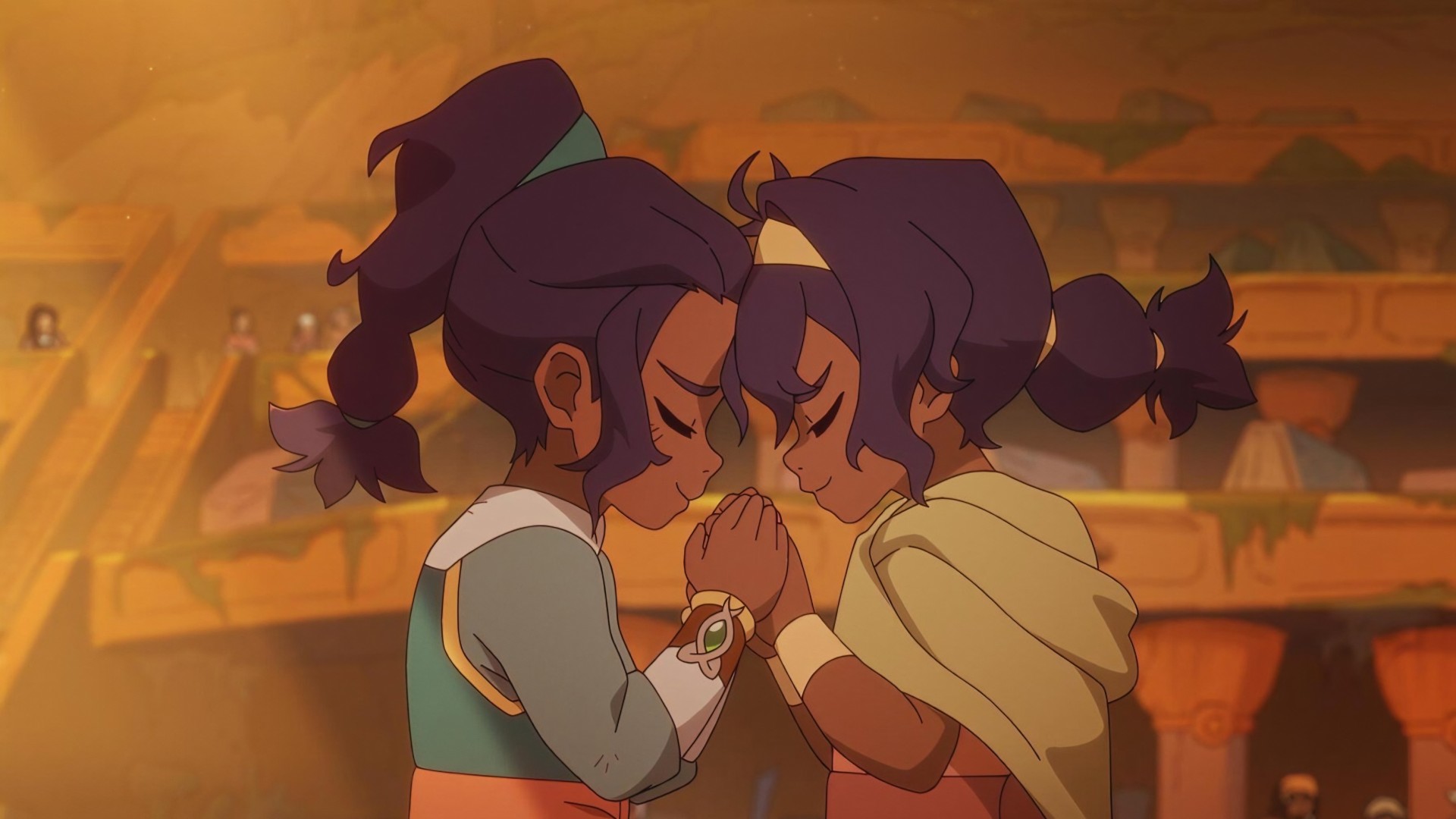
The show encounters notable issues, however, when examining its visual presentation. Following the gold standard set by Studio Mir’s work on The Legend of Korra—defined by razor-sharp linework, fluid hand-to-hand choreography grounded in authentic martial disciplines, and rich, hand-painted backgrounds—Seven Havens visibly scales back its ambitions. While the art direction and environmental concept art remain beautiful, the kinetic energy of the character animation occasionally lacks punch, drifting into stiff motion cycles and noticeable frame-rate dips during high-intensity bending skirmishes. The dynamic camera framing, the nuanced martial arts forms unique to each bending discipline, and the tactile weight of their attacks that made battles in The Legend of Korra unforgettable are noticeably muted here, resulting in an aesthetic that feels serviceable and competent rather than breathtaking.
Compounding this visual step-down is an erratic, compressed release strategy that undercuts the narrative’s emotional resonance. Burning through a 13-episode season in rapid-fire batches of three, punctuated by a four-episode finale dump, severely curtails the natural pacing of the story. While I am not entirely opposed to binge-watching, this is simply not that type of show. Complex mysteries, personal betrayals, and sudden plot twists that ought to leave viewers contemplating their implications for days are instead swept aside during these marathon drops. Key character moments and quieter, self-reflective sequences are swallowed by the sheer velocity of the release schedule, denying major revelations and cliffhangers the narrative breathing room they deserve to settle.

Verdict
Despite the compromised release pace and an animation style that does not quite match the visual peak of its predecessors, Avatar: Seven Havens remains an exceptionally written, high-stakes triumph of Western fantasy storytelling. Its bold reinterpretation of the Avatar cycle, coupled with rich character writing and expansive lore, ensures that the mythos continues to evolve into bold, deeply satisfying new territory. With three more seasons already confirmed, we will eventually get the answers we are craving—and hopefully watch Pavi and Nisha become the heroines this world so desperately needs.
⭐⭐⭐⭐
